Shipping Labels That Save Time and Postage
Shipping labels do more than stick to a box. Learn to compare rates, prevent delivery mistakes, print faster, and cut postage costs on each shipment daily.
August 11, 2026
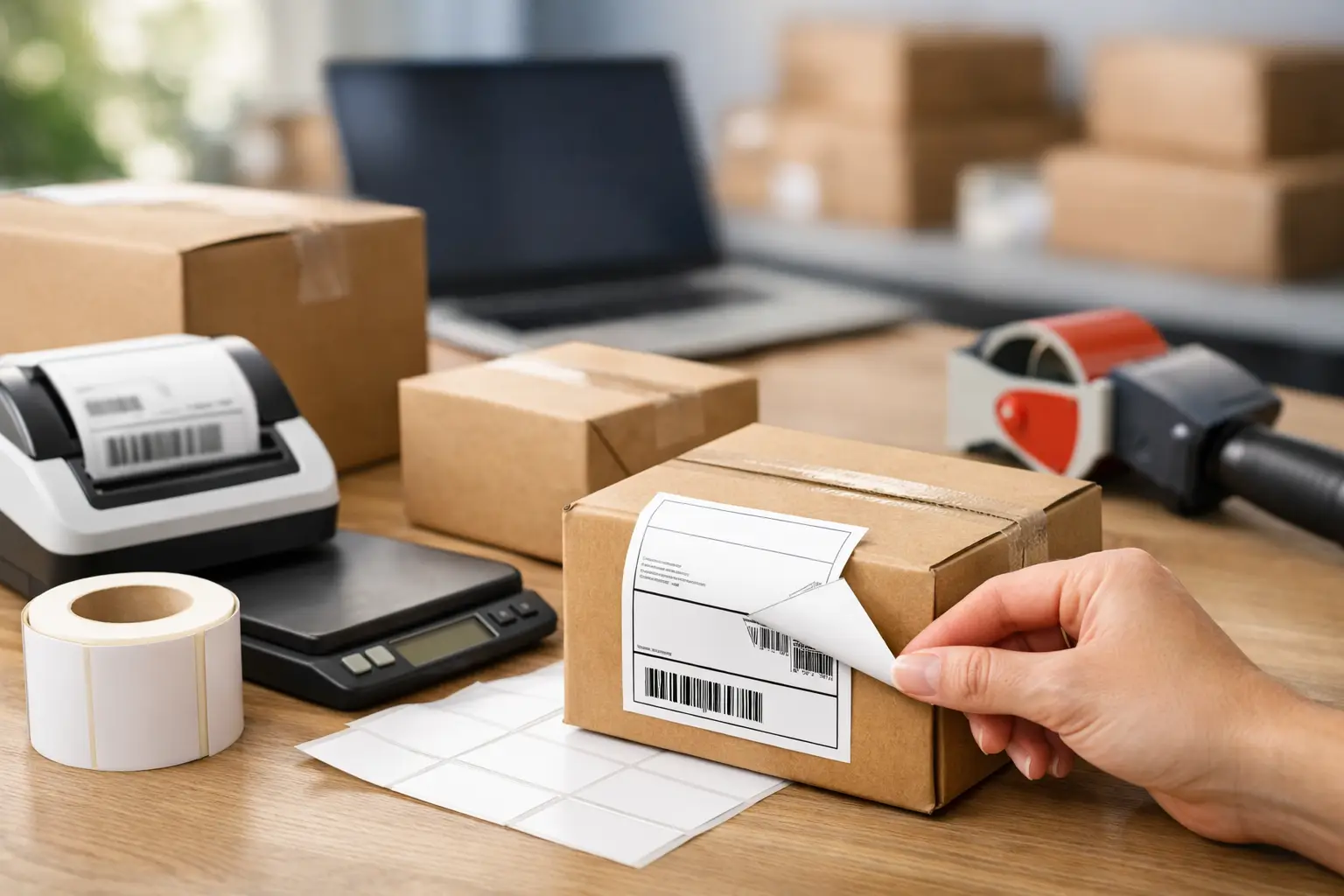
A shipping label looks like a tiny square of paperwork until it costs you $18, sends a package to the wrong state, or gets your best customer asking where the heck their order went. Shipping labels are where your fulfillment process either gets tight or starts leaking money.
The good news: you do not need a warehouse full of people or a logistics degree to get this right. You need accurate order data, the right carrier service, a package that matches reality, and a workflow that does not make you buy postage one order at a time like it is 2009.
Shipping Labels Are a Cost Decision
A label is not just an address and a barcode. It determines the carrier, service level, package type, billed weight, delivery commitment, and tracking record for an order. Change one detail and the price can change too.
That is why the cheapest-looking option is not always the cheapest shipment. A slow service might save a buck but create support tickets. An express option might protect a high-value order or save a customer relationship. A slightly larger box can trigger dimensional weight and turn a reasonable rate into a postage crime scene.
Smart merchants treat label creation as the last checkpoint before money leaves the building. Before you print, look at the rate, the expected delivery window, and the service rules. If you are shipping dozens or hundreds of orders, that quick check needs to happen in one screen, not through a carrier-by-carrier scavenger hunt.
Start With Clean Address Data
Most shipping disasters start before the package hits the scale. They start with bad information: missing apartment numbers, swapped city and ZIP Code fields, unusual street formats, or customers who type faster than they think.
Address validation helps catch obvious problems, but it cannot solve every weird address on earth. A customer may have entered a valid street with the wrong unit number. A business address may require a suite number. A rural delivery may need a specific format. If an address looks questionable, especially for a high-value order, take the extra minute to confirm it.
Keep the sender address clean too. Your return address affects undeliverable packages, return processing, and customer confidence. Use a real location where returns can be received and handled. Sending every return to a place nobody checks is a great way to lose inventory twice.
For repeat buyers, do not assume old data is permanent truth. Customers move. Marketplace profiles get stale. If an order triggers an address warning or feels off, review it before buying the label. Fixing it afterward is usually more expensive and more annoying.
Pick the Carrier and Service for the Job
USPS, UPS, and FedEx all have strengths. None wins every shipment. The right choice depends on the package, destination, delivery speed, and the rate available to your business at that moment.
USPS is often a strong play for lightweight parcels, residential deliveries, and shipments headed to P.O. boxes. UPS and FedEx can make more sense for heavier boxes, time-sensitive services, and certain commercial deliveries. But rules of thumb are not rate quotes. A two-pound shipment to Texas and a two-pound shipment to Alaska are different animals.
Compare real-time rates before you commit. This matters even more when order volume rises, because small differences stack up fast. Saving $1.20 per label sounds cute until you ship 800 packages a month. Then it is $960 that can stay in your business instead of wandering off into retail postage pricing.
Service level matters, too. Do not pay for speed your customer did not ask for, but do not promise fast delivery and then select the bargain-bin option. Match the service to what you sold. If your store advertises free shipping, be clear about the delivery expectation. If customers can upgrade shipping, make sure your team can actually fulfill that promise.
Measure the Package, Not Your Guess
Carrier invoices do not care that you were "pretty sure" the box was 12 inches long. They care about the dimensions and weight tied to the label. If your package measurements are wrong, you may see adjustment charges later. Nobody likes a surprise bill, especially after the order is already delivered.
Use a reliable scale and measure the outside of the sealed package. Include packing material, tape, protective corners, and anything else that makes the box bigger. Round measurements according to the carrier's rules, not whatever number feels friendlier.
Dimensional weight is where many sellers get smoked. Carriers may bill based on the amount of space a package occupies, not only its actual weight. A large box full of lightweight products can cost more than a smaller, heavier box. That makes packaging a shipping strategy, not just an operations chore.
Right-size your boxes where you can. Use enough protection to prevent damage, but do not ship a coffee mug in a carton built for a small microwave. Better packaging can lower postage, reduce breakage, and make your unboxing experience look less chaotic. That is a solid three-for-one.
Print Shipping Labels That Scan the First Time
A label must be readable, flat, and securely attached. Sounds obvious. Yet wrinkled labels, taped-over barcodes, low-ink printers, and labels slapped across box seams still create avoidable headaches every day.
For regular volume, a thermal label printer is usually worth it. It prints quickly, does not require ink, and produces sharp barcodes that scan cleanly. If you are just getting started, a standard printer and adhesive sheets can work fine. The trade-off is more supplies, more cutting or peeling, and more chances to misalign a print job at 4:45 p.m. when your pickup window is closing.
Place the label on the largest flat surface of the package. Do not cover the barcode with clear tape unless the carrier specifically permits the material and it will not interfere with scanning. Keep old labels and barcodes completely covered or removed. A package with competing barcodes is basically asking to take a mystery tour.
Before your first big shipping day, print a test label. Confirm that your printer settings match the label size and that barcodes are not cut off, stretched, or faded. One five-minute test can prevent a very long afternoon.
Build a Shipping Label Workflow That Does Not Fight You
The biggest fulfillment gains usually come from removing repetitive steps. Manually copying names and addresses, checking each carrier website, and buying labels one at a time is not a process. It is a productivity tax.
Centralize your orders, compare available services, purchase postage, and print in batches. For marketplace sellers and multichannel merchants, store connections and CSV uploads can prevent the tedious copy-paste routine that causes bad addresses and duplicate shipments. Give your team clear rules for shipping upgrades, signature requirements, insurance, and international orders so nobody is improvising on the fly.
A practical workflow has four checkpoints:
- Verify the order and address before postage is purchased.
- Confirm package weight and dimensions after packing.
- Compare carrier rates against the promised delivery speed.
- Print, scan, and hand off packages with a record of the shipment.
That does not need to be complicated. It just needs to be repeatable. The Shipping Dude helps merchants compare USPS, UPS, and FedEx pricing, buy labels quickly, and skip the usual per-label fee nonsense on its entry plan. Less clicking. More shipping.
Do Not Ignore the Exceptions
Some orders deserve extra attention. High-value products may need insurance or a signature. Fragile goods need packaging that survives real handling, not just a gentle desk test. International shipments require customs details that accurately describe what is inside and what it is worth.
Also watch for restricted items, carrier-specific rules, and destination limits. A label can print successfully and still be wrong for the contents of the package. If you sell regulated, perishable, oversized, or hazardous products, build a separate review step for those shipments. This is one area where moving fast without checking the rules can get expensive fast.
Keep an eye on carrier adjustments and delivery exceptions after labels are purchased. These reports show where your process is slipping: inaccurate dimensions, incorrect weights, insufficient packaging, or service choices that do not fit the order. Treat the data like a coach, not an insult.
Your shipping labels should make fulfillment boring in the best possible way. Accurate order data, right-sized packaging, live rate comparison, and clean printing turn a messy daily task into a controllable cost. That means fewer surprises, fewer customer emails, and more money left over for the part of your business that actually grows it.
