Is USPS Cheaper Than UPS and FedEx?
Is USPS cheaper than UPS and FedEx? Usually for small, light packages - but size, speed, zones, and surcharges can flip the math fast.
June 23, 2026
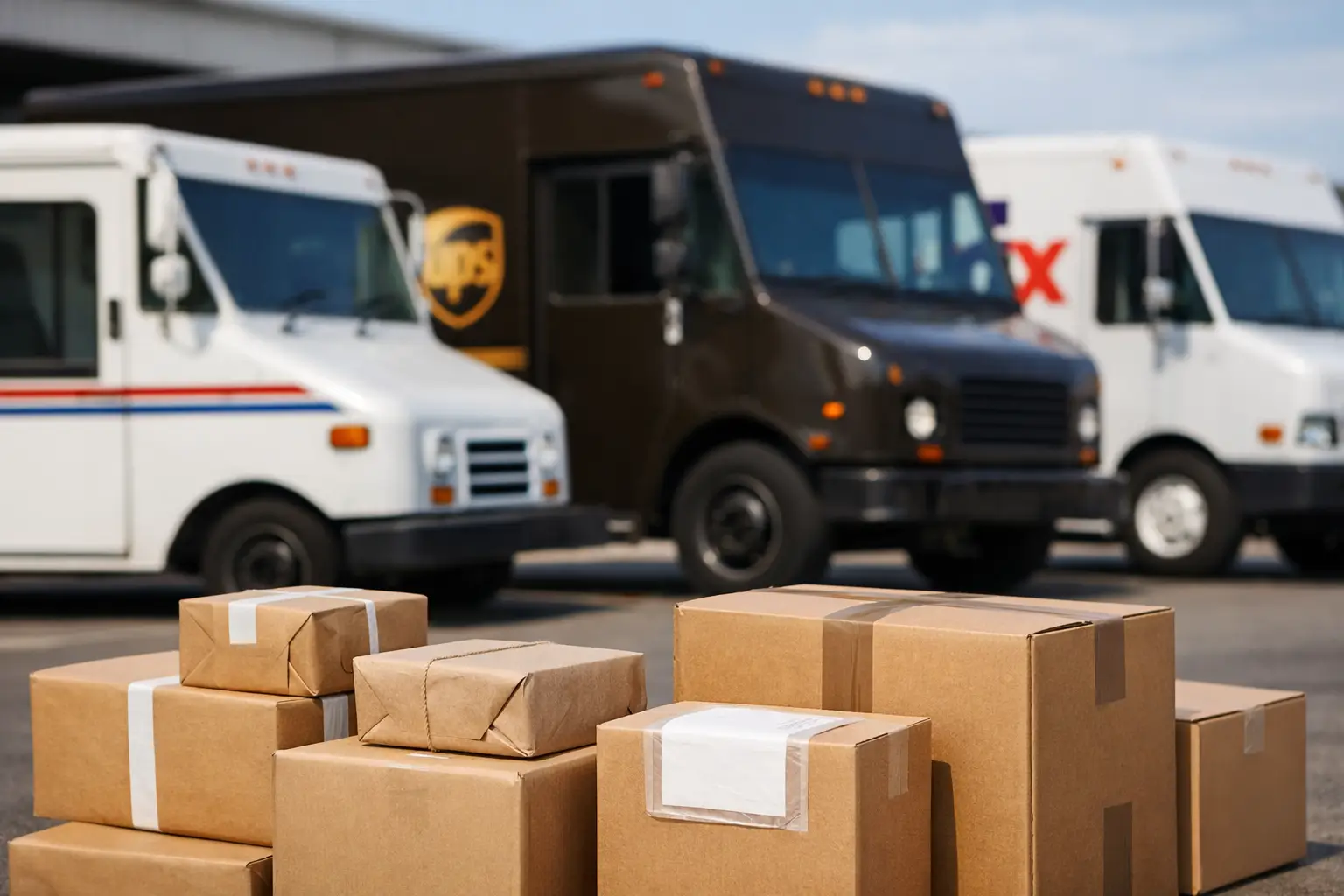
If you ship enough orders, you already know the annoying truth: asking whether is usps cheaper than ups and fedex sounds simple, but the real answer changes fast once package size, weight, speed, and delivery zone get involved. Sometimes USPS is the clear budget winner. Other times, UPS or FedEx quietly beats it - especially when your box gets chunky, your customer lives far away, or residential surcharges start creeping in.
That means the smart play is not picking one carrier and hoping for the best. It is understanding where each one wins, where each one gets weird, and where your shipping costs can jump when you were expecting a cheap label.
Is USPS cheaper than UPS and FedEx for most sellers?
For many ecommerce sellers, USPS is often cheaper for lightweight packages, especially anything under a few pounds. If you are sending small parcels, padded mailers, or compact boxes, USPS Ground Advantage and Priority Mail can be hard to beat.
That is the part everyone likes to hear. The part they like less is this: USPS does not automatically stay cheaper as soon as your packages get heavier or larger. Once dimensional weight, long-distance shipping, or faster guaranteed service enters the picture, UPS and FedEx start looking a lot more competitive.
So yes, USPS is often cheaper than UPS and FedEx - but mostly in a specific lane. Light packages, smaller dimensions, and non-urgent residential deliveries are where USPS tends to shine.
Where USPS usually wins on price
USPS has a sweet spot, and if your business lives there, you can save real money.
The biggest USPS advantage is small-package affordability. Sellers shipping phone accessories, apparel, cosmetics, books, parts, supplements, and other compact products often find USPS rates friendlier than the private carriers. If the package is lightweight and does not eat up much space, USPS pricing can stay pleasantly sane.
It also tends to work well for residential deliveries. UPS and FedEx can stack on residential fees, delivery area surcharges, and other little pricing landmines that make a cheap-looking rate less cute once you actually buy the label. USPS usually feels more straightforward for shipping to homes because home delivery is what they do all day, every day.
PO boxes are another USPS win. If your customer uses a PO box, USPS is the obvious move because the other two generally cannot deliver there in the standard way.
USPS can also be a strong option when you want decent speed without paying premium rates. Priority Mail is not always the cheapest service on paper, but it often lands in the nice middle ground between cost and transit time.
Where UPS or FedEx can beat USPS
Here is where the plot thickens.
If your package is heavy, oversized, or traveling across the country, USPS can lose its price advantage fast. UPS and FedEx are often stronger for larger boxes because their networks and pricing models are built to handle more of that freight-like parcel volume.
Dimensional weight is a huge deal here. A box does not have to weigh much to be expensive. If it is big enough, carriers charge based on the space it takes up, not just the scale weight. That means a light but bulky package can suddenly cost way more than expected. In those situations, UPS or FedEx may come in lower than USPS.
They also tend to compete better on guaranteed or business-critical speed. If your customer needs overnight shipping, time-definite delivery, or tighter service commitments, USPS is not usually the first carrier merchants trust. UPS and FedEx built their reputations on that side of the game.
And if you have negotiated commercial rates, the math shifts even more. Many merchants never compare true account-level pricing. They compare retail USPS to retail UPS or FedEx and think they got the answer. That is rookie math. Discounted carrier rates can completely change which service is cheaper.
The real variables that decide the cheapest carrier
The carrier name matters less than the shipment profile. That is the part too many sellers miss.
Weight is the first lever. A 10-ounce mailer is a very different pricing story than a 7-pound box. USPS often dominates at the low end. As weight climbs, UPS and FedEx become more attractive.
Box size is the second lever, and honestly, it punches above its weight. You can get wrecked by dimensions even when the item itself is light. If your packaging is sloppy, you are paying for air. That is not a carrier issue. That is a packaging issue with a shipping bill attached.
Distance matters too. Shipping from New Jersey to Pennsylvania is one thing. Shipping from New Jersey to California is another. Higher zones can expose weaker pricing fast, and the cheapest carrier for nearby orders may not be the cheapest one nationwide.
Then there is speed. If the customer is fine with standard delivery, USPS may look great. If they want guaranteed speed, UPS or FedEx often earns the extra money.
Finally, surcharges matter more than most sellers want to admit. Residential fees, fuel surcharges, additional handling, delivery area fees, and peak season add-ons can turn a rate from decent to painful. The label price is not always the final truth.
Is USPS cheaper than UPS and FedEx for ecommerce packages?
For a lot of ecommerce businesses, yes - especially when the order is small, light, and headed to a residence. That is why USPS is such a common choice for direct-to-consumer brands and marketplace sellers.
But if you sell shoes in bulky boxes, home goods, bundled multi-item orders, subscription shipments, or anything awkwardly shaped, do not assume USPS is your low-cost hero. It might be. It might also be the expensive option wearing a familiar uniform.
This is where merchants get burned by habit. They keep using the same carrier because it worked for one product mix, one season, or one order profile. Then product sizes change, average order value rises, and suddenly the old shipping setup is leaking money every day.
The cheapest carrier is not a permanent identity. It is a shipment-by-shipment decision.
Why rate shopping beats carrier loyalty
Carrier loyalty sounds nice until it starts eating your margin.
If you are serious about cutting postage costs, you need real-time comparisons instead of gut feelings. One package might be cheapest with USPS. The next one might be cheaper with UPS. The next might only make sense with FedEx because of delivery timing or package dimensions.
That is why smart merchants stop asking for one universal winner and start comparing each shipment. No gold star for loyalty. No prize for guessing. Just pick the cheapest service that still does the job.
This is also where software earns its keep. A platform like The Shipping Dude lets you compare USPS, UPS, and FedEx rates in one place so you are not bouncing around carrier sites like it is 2009. That means faster label buying, fewer bad pricing assumptions, and less overpaying because you were too busy to check.
Common mistakes when comparing USPS, UPS, and FedEx
One of the biggest mistakes is comparing headline rates without matching the service level. Ground is not the same as expedited. Economy is not the same as guaranteed delivery. If you compare mismatched services, the numbers lie.
Another mistake is ignoring package dimensions. Sellers obsess over ounces and forget inches. Then dimensional pricing shows up and smacks the profit right out of the order.
The third mistake is using retail rates as the benchmark. Retail pricing is not the whole picture, especially for businesses with access to discounted labels through shipping software or carrier programs.
And maybe the most common mistake of all is deciding based on one shipment. One package proves nothing. You need a pattern across your actual order mix.
So, which one should you use?
Use USPS when the package is light, compact, residential, and not ultra-urgent. That is usually the cleanest money-saving lane.
Use UPS or FedEx when the shipment is heavier, bulkier, time-sensitive, or likely to trigger dimensional pricing where private carriers offer a better deal.
If you ship a mixed bag of products, the answer is probably all three. That is not indecisive. That is how grown-up shipping works.
The best merchants are not asking which carrier they should marry. They are asking which one deserves this label right now. Keep it that simple, keep checking the numbers, and let the cheapest good option win.
